
Recently, Anthropic's AI programming tool, Claude Code, experienced an inadvertent leak of 512,000 lines of source code due to a flaw in its npm package build. The related content quickly spread across GitHub. Public discussion has largely focused on technical vulnerabilities and the leakage of trade secrets, with little attention paid to trademark matters.
Today, PUYIZHICHAN examines the Claude Code incident from a trademark perspective, analyzing the protection of rights and interests, the boundaries of infringement, and corporate response strategies, providing a reference for the industry.
Clarifying Trademark Ownership of Claude Code: Trademark is a Key Foundation for Rights Protection
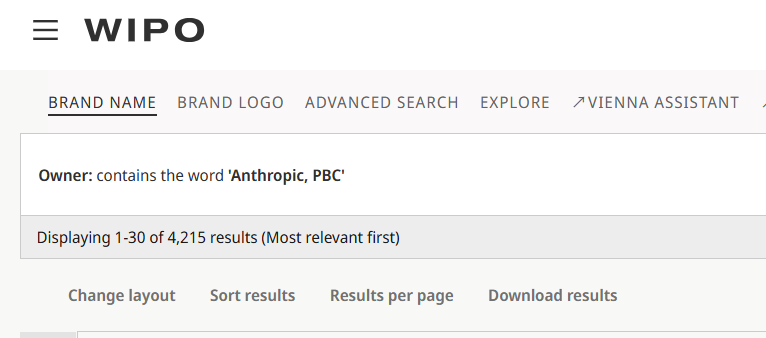 WIPO Search Results
 China Trademark Office Search Results
The Claude Code and related trademarks are owned by Anthropic and serve as the legal basis for its response to infringements. In a search conducted today by PUYIZHICHAN in the WIPO Brand Database using "Anthropic, PBC" as the owner, 4,215 trademark records were found. Even in the Chinese market, a search using the company's Chinese name, "安若科公共利益公司," yielded 24 trademark application records. Anthropic has established a global trademark portfolio around "Claude" and "Claude Code," clearly defining its official brand identity.
The trademark logo, brand name, official npm package name, and other elements collectively form a complete brand identification system, which is crucial for distinguishing the official product from counterfeits. It is important to emphasize: source code is a technical asset, while a trademark represents brand identity. The two are independent yet interconnected. A source code leak does not imply loss of control over the trademark; as long as ownership is clear, brand control can be firmly maintained.
Following a source code leak, third-party actions involving replication or imitation that cross the line of trademark infringement warrant greater vigilance than the misuse of code itself. These actions mainly fall into three categories:
Some third parties develop counterfeit products based on the leaked source code, using "Claude Code" in full or in part, or using similar marks, in product names, promotional materials, and npm package names, misleading users into believing these are official products.
Such actions constitute direct trademark infringement. Even if done under the guise of "open-source research," it does not exempt them from liability—trademark law protects the brand's source-identifying function, independent of the code's usage context. Anthropic has previously filed complaints against open-source projects, demanding the removal of relevant trademark logos, consistent with this logic.
Some third parties, while not directly using the trademark, deliberately associate themselves with the brand in their promotions. Examples include statements like "Developed based on Claude Code leaked source code" or "Claude Code alternative," leveraging the brand's reputation to gain undue traffic.
Although such actions may not constitute direct trademark infringement, they fall under trademark dilution and unfair competition, violating the Anti-Unfair Competition Law. Anthropic can seek injunctions and claim damages in such cases.
The core boundary lies here: trademark law does not protect source code; source code is protected by copyright, trade secrets, and similar mechanisms. Trademark law, however, protects product brands.
Third parties may conduct research or secondary development based on leaked source code (provided they obtain proper authorization), but they have no right to use the "Claude Code" trademark or similar marks for promotion or naming. Furthermore, falsely claiming official authorization constitutes infringement.
The Claude Code incident offers a crucial lesson for AI companies: beyond technical security, trademark compliance is equally critical. It is recommended to focus on three key areas:
First, Solidify Trademark Ownership and Establish Proactive Defenses.
Before launching a product, register trademarks in core classes such as Class 9 and Class 42. Consider filing for defensive trademarks to cover similar marks. Deeply integrate the trademark with the product, embed it in official branding, and retain evidence of use to facilitate future infringement claims.
Second, Establish an Emergency Response Mechanism for Leaks to Mitigate Damage Quickly.
Following a code leak, immediately file complaints against infringing products on platforms like GitHub and npm. Send cease-and-desist letters to high-risk infringing parties to preserve evidence. Simultaneously, issue clarifications through official channels to reduce the likelihood of user confusion.
Third, Integrate Trademark Compliance into the Entire Process for Proactive Prevention.
Incorporate trademark compliance requirements into processes like code releases and third-party collaborations, clearly defining authorization boundaries. Build a multi-layered protection system encompassing "copyright + trade secrets + trademark + patent" to safeguard core assets.
The code leak in the Claude Code incident can potentially be addressed through technical fixes. However, once a trademark is diluted or misused, the resulting brand damage can be irreparable.
For AI companies, technology forms the "skeleton," while the trademark represents the "identity." Source code may leak, but control over the trademark must not be lost. Only by prioritizing trademark protection and establishing a solid compliance foundation can a company secure its core brand competitiveness.
